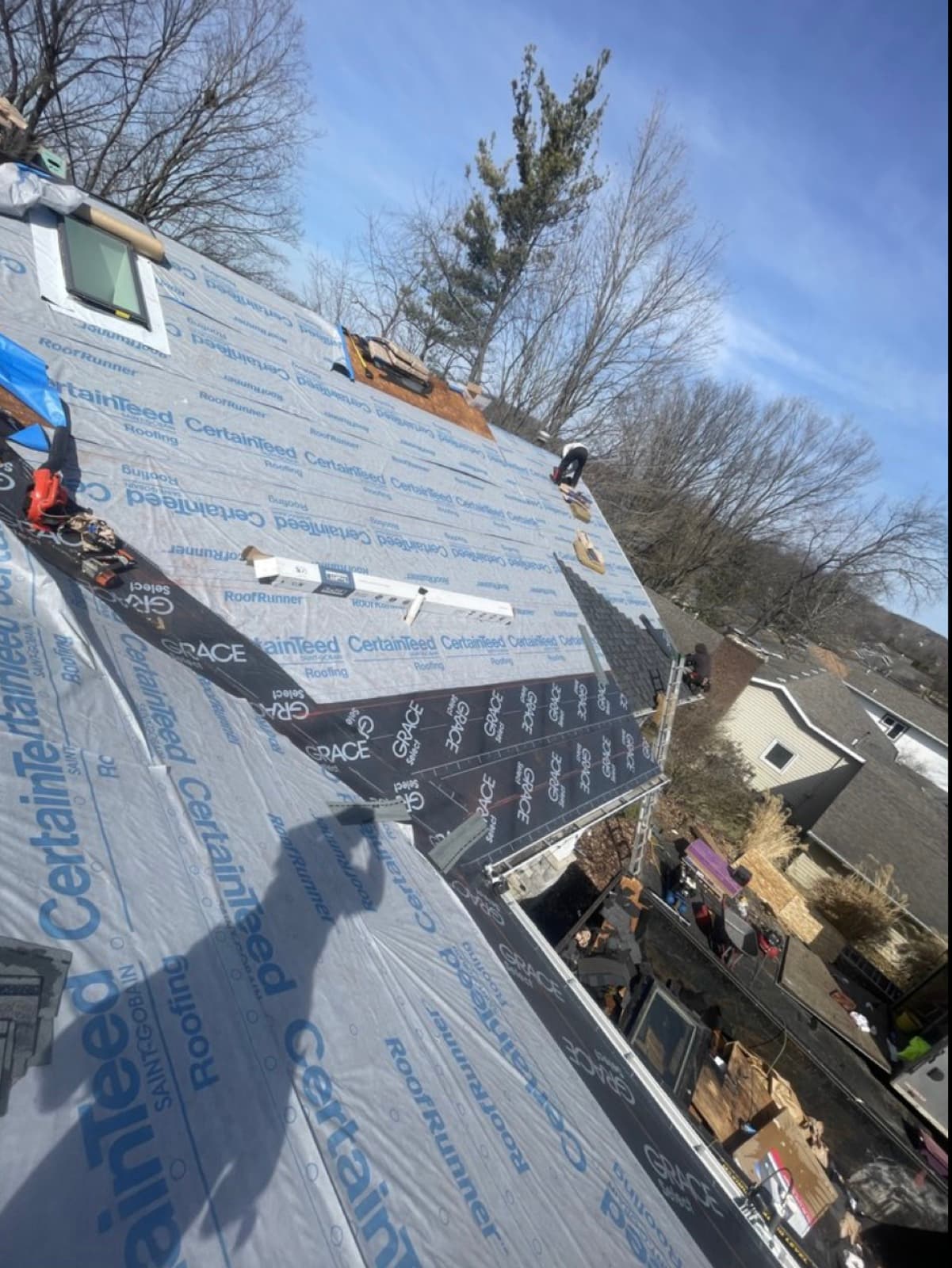
Roof Leak Repair
Roof leak repair in Grand Rapids, MI
Warning Signs
Signs you have a roof leak
Some of these are obvious. Others hide in the attic for months before they reach your ceiling. Notice any of them and it is worth a look.
Active dripping
Water coming through a ceiling, light fixture, or wall during or after rain. Put a bucket down and call, this one should not wait.
Ceiling or wall stains
Brown rings, bubbling paint, or spreading damp spots mean water has been getting in for a while, even if you have never seen a drip.
Attic moisture
Damp insulation, wet decking, water trails on the rafters, or a musty smell up in the attic are early signs of a leak overhead.
Damaged or lifted flashing
Most leaks start at the flashing, around chimneys, vents, walls, and valleys. If it is cracked, rusted, or pulling away, water is finding the gap.
Missing or broken shingles
Any spot where shingles are gone, cracked, or curled is an open door for water to reach the underlayment and the deck.
Don't Wait
A small leak is the cheap version of a big problem
Water that gets past the roof does not stop at the shingles. It soaks insulation, stains and weakens drywall, rots framing and decking, and can feed mold in as little as 24 to 48 hours. Catching it early usually means a quick repair instead of a ceiling, attic, and structural job later.
Before We Arrive
What to do before the inspection
A few simple steps protect your home and help us find the source faster. Stay safe, none of this is worth a fall.
- Move furniture and valuables away from the drip and put down a bucket or tarp
- If a ceiling is bulging or sagging from pooling water, keep clear of it and call us right away — don’t try to drain it yourself
- Take photos and note when the leak appears (steady rain, wind-driven rain, snowmelt)
- Do not climb onto a wet or steep roof, leave that to us
How It Works
From your call to a dry house
Finding a leak is detective work. Here is how we run it.
Call or request an estimate
Reach out as soon as you notice the leak. The sooner we look, the less damage spreads.
Photos & description
Send a few photos and tell us when and where the water shows up. It helps us come prepared.
On-site inspection
We trace the leak to its real source, which is often well uphill of where the water shows inside, and check the surrounding area.
Repair recommendation
You get a clear plan to stop the water: what failed, what it takes to fix it, and the cost. If it is storm-related, we can help document it for a claim.
Common Questions
Roof leak FAQ
Why is my roof leaking if the shingles look fine?+
Most leaks are not the shingles at all, they are the flashing around chimneys, vents, walls, and valleys, or a small gap where two roof planes meet. Water also travels, so the stain inside is often several feet from the actual entry point. We trace it to the source.
Is a roof leak an emergency?+
A small stain may not be urgent, but active dripping is, because the water is already reaching insulation, drywall, and framing where it grows mold and rot. The longer it sits, the more it costs to put right. When in doubt, call.
Will my insurance cover a roof leak?+
Sudden, storm-caused leaks are often covered; leaks from long-term wear or neglect usually are not. After an inspection we can tell you whether it looks storm-related and help document it. Coverage decisions are made by your carrier.
Can you find a leak even if it is not raining?+
Yes. We inspect the flashing, penetrations, valleys, and decking for the failure points that let water in, and check the attic for moisture trails. We do not need an active storm to find the source.
Free Estimate
Stop the leak before it spreads.
Call (616) 500-7089 now or request an inspection online. We will find where the water is getting in and give you a clear plan to fix it.